


🎯Powering flight one gallon at a time, out of sight, never out of mind.
I’m Rob Kennedy, a lifelong educator, trained classical musician, and unapologetic AvGeek. I’ve launched AvGeek in Residence to explore the overlooked, under-lit corners of the aviation industry: the people, systems, and stories that power the industry, from the ramp to the operations centers and beyond.
In these challenging times, when companies everywhere are downsizing, being acquired, or even going out of business, I want you to be aware of the opportunities available worldwide in aviation. My goal is to provide you with a glimpse into some of the hundreds of jobs available in this sector. Literally, there’s something for every age, experience level, and skill set.
Today’s story offers a look at the men and women who fuel the airplanes we fly. Their experience, skill, and care make this essential operation safe and routine.
Listen to this article now. Audio powered by LM Notebook.
💥 Introduction: The Invisible Power Source
Before every on-time departure and every jet engine that roars to life, someone has already done the quiet, critical work of putting the right amount of the right fuel in the right tank. Fueling agents are the first and last hands on the aircraft before takeoff. They work in the shadows of the jet bridge, often unseen, but absolutely essential. This is their story.
⏳ A Brief History of Aircraft Fueling
In aviation’s earliest days, pilots or mechanics would hand-pump fuel into small aircraft tanks using rudimentary tools. As aircraft grew in size and range, especially after World War II, the need for a safer and more efficient fueling process became clear. The advent of underground hydrant fueling systems at major airports, the transition from aviation gasoline (AVGAS) to jet fuel (Jet A and Jet A-1), and the digitization of fueling records have all contributed to shaping the modern fueling operation. Today, precise fueling down to the kilogram is standard, and a coordinated ground crew makes it happen.
🛠️ Today’s Fueling Procedures
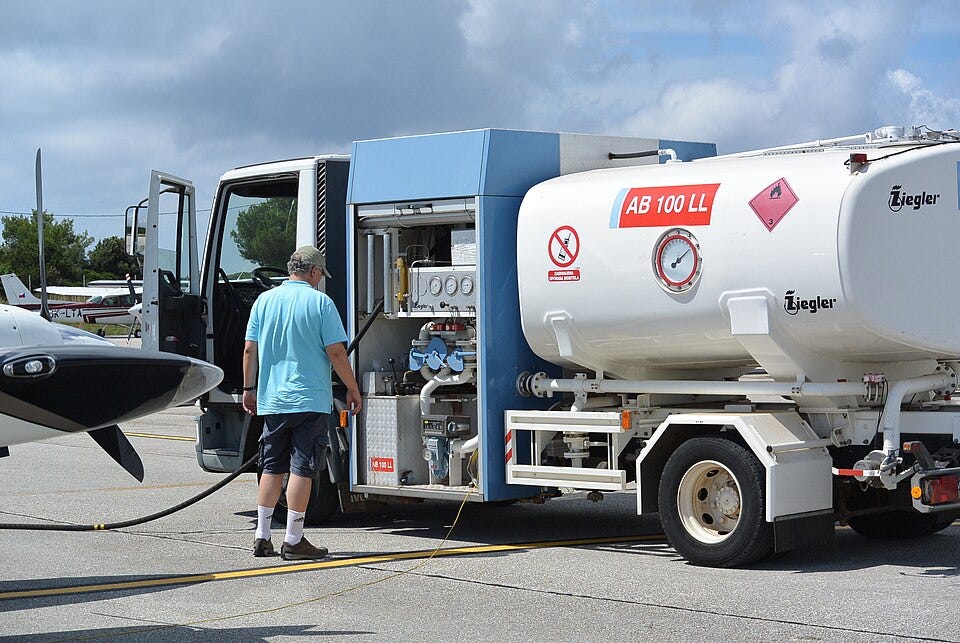
Modern commercial aircraft are typically fueled via high-pressure systems connected either through a fueling truck or a hydrant dispenser cart. Fueling agents receive a fueling order in advance, detailing the amount of fuel required for each tank (center, wings, and auxiliary) based on the aircraft type, weight, weather conditions, and flight distance.
The process begins with bonding the truck or cart to the aircraft to eliminate static electricity. The fueling agent confirms the fuel type (Jet A or Jet A-1), connects the hose, and starts the pump. Communication with the cockpit ensures that refuelling can begin safely. Throughout the procedure, the agent monitors pressure gauges and flow meters to prevent overfilling. Upon completion, the total loaded fuel is verified by both the agent and the flight crew.
In rare cases, aircraft may need to be defueled, meaning that fuel must be removed from the tanks. This may occur when a flight is cancelled after fueling has already been completed, when maintenance requires an empty or lighter aircraft, or when the wrong type or quantity of fuel has been loaded. Defueling is conducted in accordance with strict safety protocols. The fuel is either transferred to an aircraft defueling tanker for subsequent transfer to a storage facility for reuse or disposed of in accordance with regulations.
This video shows what a fueler does.
🤮 Safety First: Clean Fuel, No Surprises
Fuel quality is non-negotiable. Fueling agents are trained to detect and eliminate potential contaminants:
Dirty fuel: Agents check for sediment, discoloration, or particulate matter using visual inspections and inline filters.
Water detection: Water can condense inside fuel tanks or contaminate storage systems. Agents use water-detection paste and perform sump checks to ensure no water is present.
Microbial growth: Jet fuel, being an organic substance, can foster microbial colonies if water is present. Additives and regular testing help prevent this.
Fuel sample testing: Agents draw samples from hydrant points or tanker trucks for "clear and bright" testing, a visual inspection for clarity and color.
Emergency shutdowns are practiced and ready to be deployed at the first sign of spillage, equipment failure, or safety breach.
💳 When the Bill Comes Due: Fuel Account Dispatch Holds
Fueling doesn’t just depend on logistics. It also depends on money. Fuel suppliers such as World Fuel Services, Menzies Aviation, and Swissport, among others, maintain close accounting of airline fuel consumption. When an airline falls behind on payments, a dispatch hold can be issued.
In this scenario, fueling agents receive a directive: do not fuel the aircraft until payment is resolved. These moments can be tense, especially when flight crews are unaware of the situation. Agents must remain calm and professional, adhering to policy while minimizing disruption.
This is more common among charter airlines, startups, or operators in financial distress. For passengers, it often results in unexplained delays.
🎓 Training, Certification, and Shifts
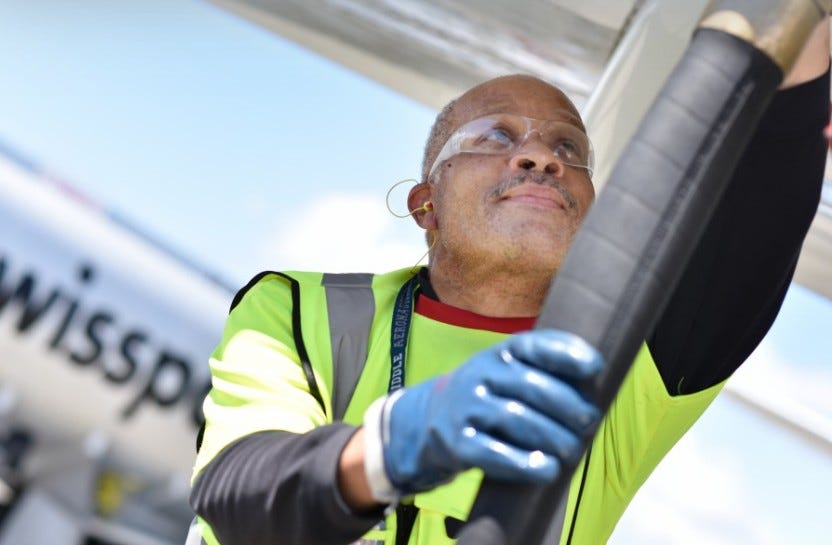
Fueling agents undergo rigorous training, often through IATA or airport-authority-certified programs. This includes:
HazMat handling and spill response
Equipment operation and fueling safety protocols
Aircraft-specific fueling procedures
Certification in airside safety and dangerous goods handling is typically required. Physical stamina is essential, as agents work outdoors in all weather, handling heavy hoses and climbing ladders.
Shifts cover 24/7 operations, including nights, weekends, and holidays. Many agents belong to unions, and career advancement can lead to supervisory or dispatching roles.
📅 A Day in the Life
A fueling agent’s shift might begin before dawn. After a safety briefing, they receive a schedule of aircraft to be fueled. Their work spans international widebodies, regional jets, and even private aircraft.
They navigate a dance of logistics: avoiding winglets, fueling on tight turnaround schedules, working around delays, and contending with weather. A quick refuel on a tight schedule might take 20 minutes, whereas filling all the tanks of a long-haul jet could require 45 minutes and multiple hose setups.
Each task is executed with clockwork precision, and yet no two days are the same.
This video offers another look at what a fueler does.
✨ Fueling the Future
Sustainable Aviation Fuel (SAF) is gaining traction in the mainstream. Fueling agents are learning to handle new blends and storage procedures. Remote sensors and fueling automation are reducing risk and increasing accuracy.
Yet even as technology evolves, the human eye, hand, and judgment remain irreplaceable. Fueling agents are among aviation's quietest professionals, but also among its most indispensable.
✈️ Stay curious!
Rob Kennedy
AvGeek in Residence
🔜 Coming Up Next in AvGeek in Residence
Aircraft Tow Operator: Responsible for positioning aircraft from one point of the airport to another via live taxiways and runways.
Aircraft Cleaning Supervisor: Responsible for directing the cleaning and sanitization of the aircraft interior
Aircraft Rescue and Firefighting (ARFF) Operator: Respond to aircraft emergencies, including crashes, fuel fires, and passenger evacuations.
Editor’s Note: I write the articles on AvGeek in Residence in collaboration with ChatGPT. This wonderful AI tool functions as my research assistant, my editor, and my brainstorming partner. ~ Rob Kennedy