

✈️ Volume 17: Airport Safety and Compliance Inspector
Safety First! Always! With No Exceptions

💬Life as an Airport Safety and Compliance Inspector
Air travel is built on trust. Passengers trust that the runway lights will work. That fuel will be handled safely. That wildlife hazards will be managed. That everyone behind the scenes is following the rules to the letter.
One of the most important people responsible for ensuring that trust is not broken is the Airport Safety and Compliance Inspector. This isn’t about the aircraft; this job is about the airport. Runways, taxiways, perimeter fencing, fueling protocols, airfield vehicle operations, and emergency access are all subject to local, national, and international regulations.
Someone has to inspect and enforce them. That someone is the Airport Safety and Compliance Inspector. That could be you.
Listen to this article now. Audio powered by LM Notebook.
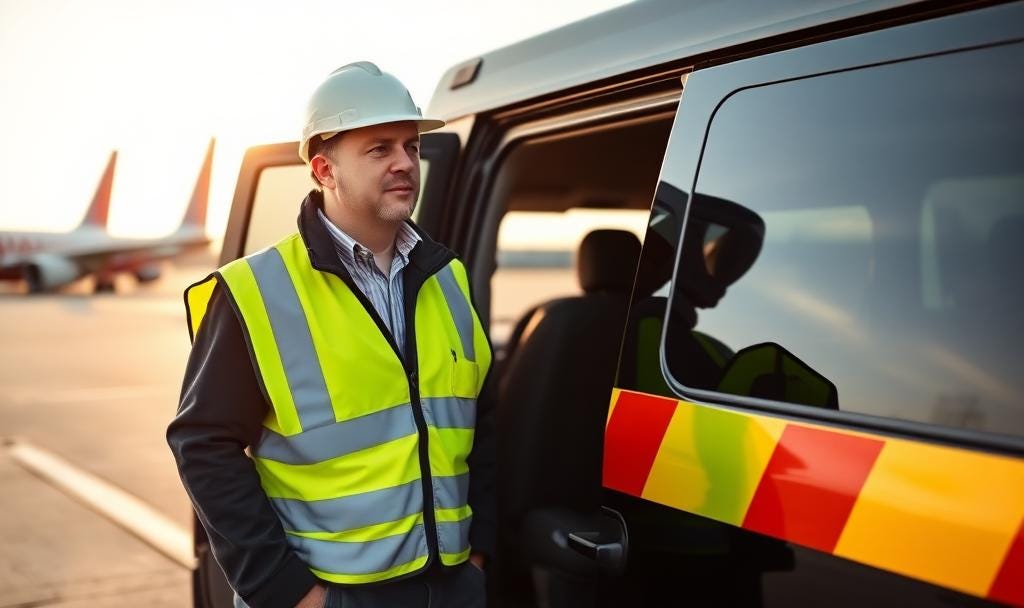
🔍 What Do Airport Safety and Compliance Inspectors Actually Do?
Airport Safety and Compliance Inspectors are responsible for ensuring that airport operations meet the hundreds of safety regulations set by agencies like the Federal Aviation Administration (FAA) in the U.S., Transport Canada, and ICAO internationally.
Their tasks may include:
Inspecting runways and taxiways for pavement conditions, debris, or lighting issues
Verifying that fueling and de-icing operations are performed correctly
Monitoring wildlife hazard programs, fencing, and signage
Checking vehicle driver permits and airside operating procedures
Ensuring the airport’s Safety Management System (SMS) is documented and up to date
Filing reports, tracking violations, and following up on corrective actions
Airport Safety and Compliance Inspectors often work odd hours, early mornings, overnight inspections, or during off-peak windows. However, their impact is critical, and their observations can literally prevent accidents before they happen.
For example, runways need to be inspected before they become active. Inspectors could make their run down the runway at 2 p.m. or 2 a.m. It all depends on what the Air Traffic Controllers decide. Remember that dreadful crash of the Air France Concorde? As it turns out, that disaster was caused in part by a small piece of metal that had fallen off the engine of the flight departing immediately before Air France 4590. That FOD (Foreign Object Debris) tore up one of the Concorde’s tires, causing pieces of the tire to be ingested by the ngines. Safety first!! Constant vigilance!
🏢 Who Employs Airport Safety Inspectors?
These roles exist at every level of an airport’s operation:
Airport Authorities: Most commercial and major airports in the U.S. and Canada have a safety or compliance division.
Regional or Municipal Airports: May hire dedicated staff or assign safety duties to cross-trained operations personnel.
Private Airport Operators: Airports serving industrial, mining, or remote communities often employ or contract safety professionals.
Consulting & Engineering Firms: These organizations provide third-party audits, SMS support, and regulatory compliance services.
Government agencies, including the FAA's field offices and Transport Canada: conduct inspections or oversee local enforcement.
🛡️ Insurance Matters
Most airports are insured either through commercial aviation insurers or municipal insurance pools. Maintaining liability insurance depends heavily on documented inspections and regulatory compliance.
Underwriters expect proof that someone is regularly inspecting the airfield, managing hazards, and logging corrective actions. A lapse in inspections or lack of qualified personnel can lead to increased premiums or loss of coverage.
This video shows an inspector inspecting a runway.
🧠 Who Fits This Role?
This job is an excellent fit for men and women who’ve spent 10–20 years in compliance-heavy environments, such as:
Pharmaceutical manufacturing (GMP)
Environmental health and safety (EHS)
Civil infrastructure QA/QC
Food safety and inspection
Power generation and hazardous materials handling
If you’re someone who thrives on documentation, checklists, audits, and holding the line on safety, this may be your ideal second act.
🎓 Mindset, Licensing, and Certifications
To succeed in this role, you need more than technical know-how. You need a mindset grounded in procedural integrity and systems thinking.
Mindset:
Attention to detail, even under time pressure
Confidence to raise concerns and enforce corrections
Clear communication and strong report-writing skills
Comfort with regulatory language and policy enforcement
Relevant Training and Credentials:
FAA Part 139 training (for U.S. airports)
Transport Canada TP312 and familiarity with CARs (in Canada)
ICAO SMS training for hazard identification and risk analysis
OSHA, WHMIS, or HAZMAT certifications often apply
A private pilot’s license, while not required, is a bonus at smaller airports
🔁 What Other Industries Have Similar Roles?
You may already have the transferable skills for this position if you've worked in:
Pharmaceutical QA or SOP auditing
Radiation safety or nuclear operations compliance
Safety inspections in manufacturing or construction
EHS or compliance management in logistics or warehousing
Federal or state/provincial regulatory agencies
The shift into aviation doesn’t require starting over. All you have to do is translate what you already know to a new, dynamic environment.
This video offers a look at the training you need to become an Airport Safety and Compliance Inspector.
👷♀️ Coming Up: A Day in the Life
In a future edition, we’ll spotlight an airport safety inspector and walk through a typical day: inspecting pavement, reviewing fueling protocols, tracking training certifications, and checking wildlife fencing.
Because the safety of thousands of daily passengers often depends on what gets noticed or missed during that shift.
🛬 Final Approach: Safety Isn’t Just a Department. It’s a Mindset!
For travellers, airports are a blur of movement and motion. For inspectors, airports present a complex system of risks that need to be identified, managed, and mitigated.
If you’ve spent your career keeping complex operations safe, compliant, and running smoothly, then airport safety inspection may offer you not just a job — but a mission.
✈️ Stay curious!
Rob Kennedy
AvGeek in Residence
Editor’s Note: I write the articles on AvGeek in Residence in collaboration with ChatGPT. This wonderful AI tool functions as my research assistant, my editor, and my brainstorming partner. ~ Rob Kennedy