


🎩 The Face of the Airline at the Boarding Door
Whenever I have travelled by air, I have made a point of speaking with the gate agent when I arrive at the gate area. That allows me to confirm my seat. I do that because the aircraft type has changed several times, and my seat was different from the one I selected online. Several times, I have shown my boarding pass to the gate agent, who smiled and said, "Mr. Kennedy, that's the wrong seat. Let me give you the correct boarding pass." The new boarding pass was for a seat in business class! A smile and courtesy will work wonders with customer-facing staff every time. And it doesn't hurt to dress conservatively.
Most travellers walk right past the gate podium without giving it a second thought. But behind that small counter stands one of the most critical roles in the entire airport experience: the gate agent. They're the last person you see before you board, and often the first person to manage the fallout when something goes wrong.
Let’s take a closer look at what it means to be a gate agent and why this role might be a perfect entry point into the aviation world.
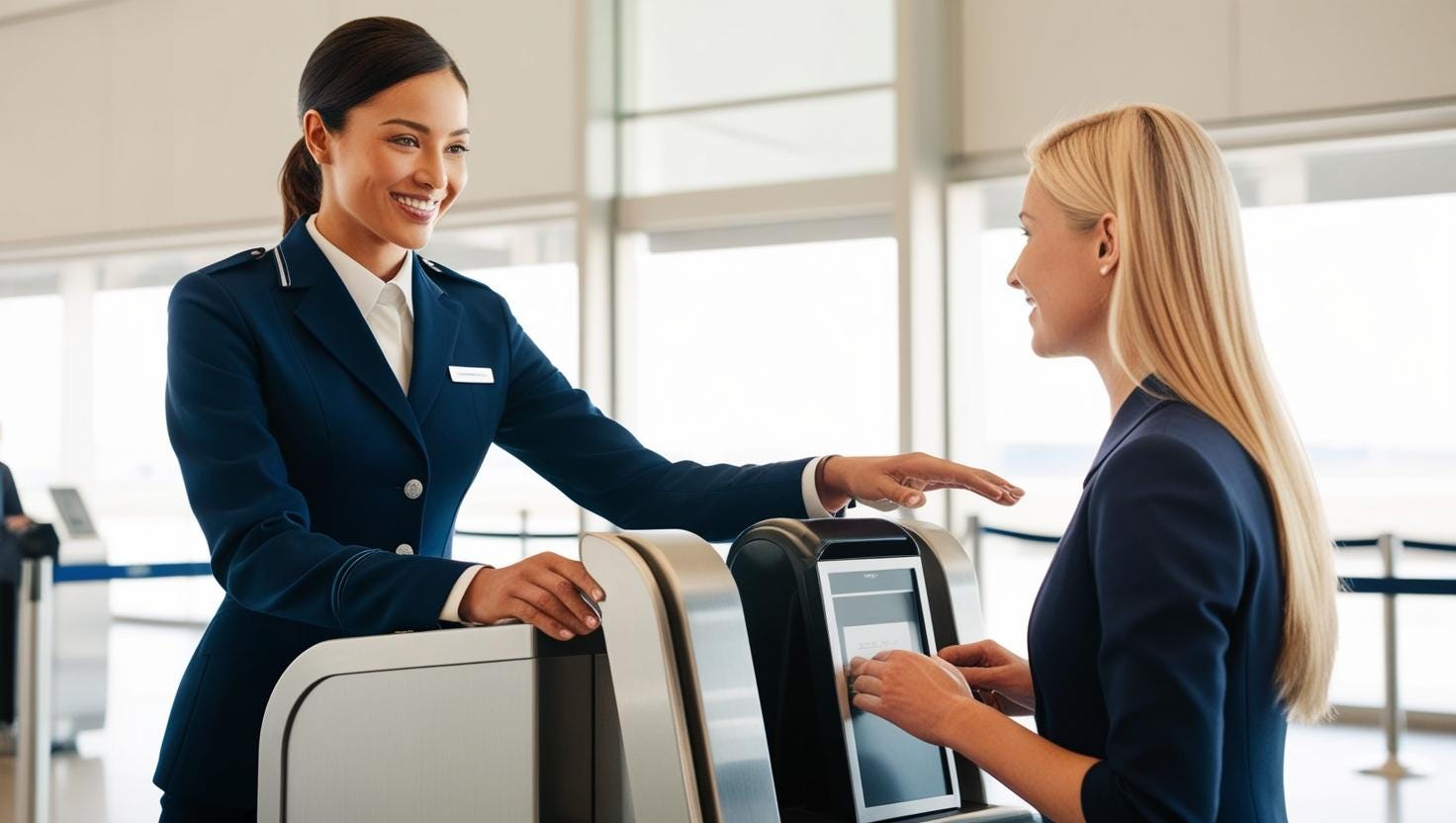
🔒 Before the Flight: Security, Communication, and Control
Gate agents are responsible for much more than scanning boarding passes. In the hour or two before a flight departs, they manage a complex series of behind-the-scenes tasks:
Crew Verification: Agents must verify the credentials of all flight and cabin crew before boarding can begin. No credentials? No entry.
Jet Bridge Access: The gate agent controls who can enter the bridge and when. That includes flight attendants, pilots, cleaning crews, caterers, and maintenance staff.
Flight Status Communication: From delays to aircraft swaps to gate changes, the gate agent must keep passengers informed clearly and frequently.
Internal Coordination: The gate agent is in constant communication with ramp personnel, customer service teams, dispatchers, and the flight crew.
In short, the gate agent is the conductor of the boarding gate orchestra.
🚪 Boarding Procedures: A Carefully Timed Operation
When boarding begins, it may seem routine to passengers, but it’s anything but simple. Here’s what gate agents are juggling:
Announce boarding groups or zones according to airline policy.
Assist passengers with disabilities, families with children, and elite status travelers who board early.
Scan every boarding pass, resolving problems such as duplicate seat assignments or passengers trying to board the wrong flight.
Handle standby and upgrade lists, which often change right up to the last minute.
Enforce the final boarding time, usually 10 minutes or more before departure. That deadline is federally mandated and non-negotiable.
Even a minor delay or miscommunication at this stage can cascade into flight delays, missed connections, and rebooking headaches.
🛬 When the Plane Arrives: The Agent's Work Isn't Done
Once a plane pulls into the gate, the gate agent springs into action again:
Secure and position the jet bridge after the aircraft has come to a complete stop.
Coordinate with the flight crew and ramp team to allow deplaning.
Meet unaccompanied minors and ensure they're handed off safely to authorized adults.
Assist with missed connections, delays, or passenger services for those deplaning.
Manage arriving flight data in airline systems and reset the gate for the next departure.
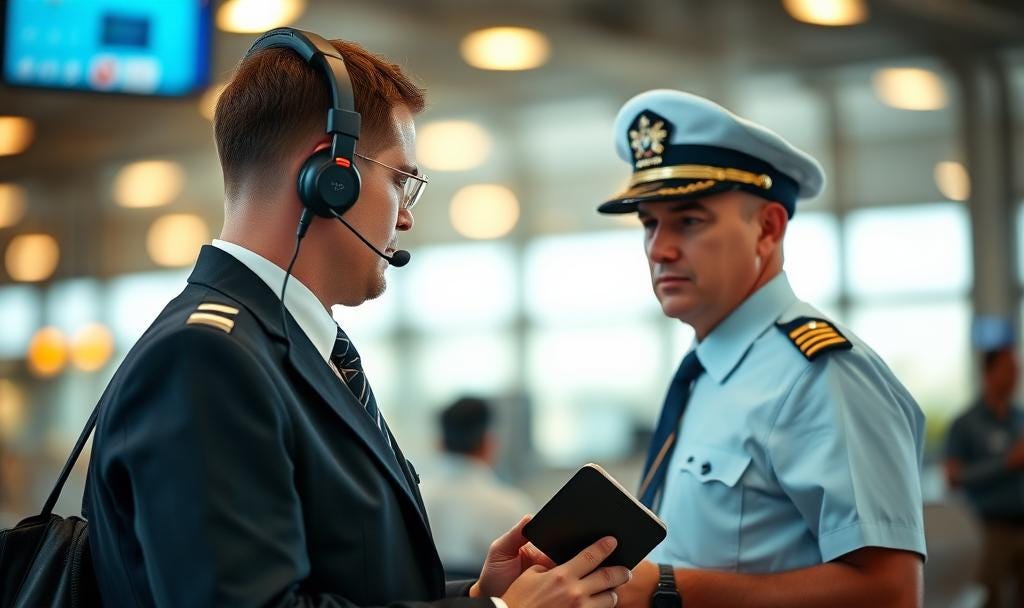
And when the next flight departs from the same gate? It starts all over again.
📄 Gate Agent vs. Customer Service Agent
While the two roles often overlap, they are distinct. Customer service agents typically work landside at check-in counters, ticket desks, and baggage services. Gate agents are airside, at the gate, handling departures and arrivals. In smaller airports, one person may do both jobs. At larger hubs, roles are more specialized.
💼 What It Takes: Skills, Education, and Requirements
Most gate agent positions are entry-level, making them ideal for career starters or those looking for a fresh direction.
Minimum Requirements:
High school diploma or GED
Ability to work flexible hours including weekends, holidays, and overnights
Clear background check and airport security clearance
Strong interpersonal and communication skills
Physical stamina for standing, walking, and occasional lifting
Training:
Provided by the employer, the airline, or the contractor
Includes airline software systems, FAA regulations, and customer service protocols
Some community colleges near airports offer related certificate programs
Pay and Benefits:
Varies by employer and location
Many roles are unionized, especially at major U.S. carriers
Benefits may include flight privileges, health insurance, and retirement plans
This video offers a look at how one major airline trains its gate agents.
📅 Who Employs Gate Agents?
Gate agents may be employed directly by airlines or by third-party contractors such as Swissport, Hallmark Aviation Services, and Menzies. Contract agents often handle multiple airlines, especially at regional airports or for low-frequency international flights.
For example, a single gate agent might work a Lufthansa flight in the morning, Icelandair in the afternoon, and WestJet in the evening, all from the same gate podium.
🚀 Getting Started: Where to Look
Interested in this kind of work? Start here:
Airline career pages
Airport authority websites
Indeed, Glassdoor, or Aviation-specific job boards
Community colleges offering aviation support programs
✈️ Gate agent roles offer a gateway to the aviation industry. If you’re organized, calm under pressure, and enjoy helping people, this may be your runway to a fulfilling career.
📲 Final Approach
Back to that smile and upgraded seat. It didn’t happen because I demanded anything. It happened because I treated the gate agent like the professional she is. And now that you know what goes into this job, maybe you’ll look up from your boarding pass next time and do the same.
LM Notebook generated this video version of my article for you.
✈️ Stay curious!
Rob Kennedy
AvGeek in Residence
🔜 Coming Up Next in AvGeek in Residence
Frontline Welcome: Check-In Agents and Lobby Coordinators. Where every journey begins, with a smile, a screen, and a steady hand.
The Ground Maestro: Ramp Coordinators in Action. How flights get turned around in 30 minutes
Guiding the Giants: Marshalls at Work. The people who guide the planes in with precision and skill.
Editor’s Note: I write these articles in collaboration with ChatGPT, my research assistant, editor, and brainstorming partner. Together, we aim to give you a clear look at aviation careers you might not have considered.
LM Notebook generated this video version of my article for you.